English

Intent
We aim to develop pupils’ abilities within an integrated programme of Speaking and Listening, Reading and Writing. Pupils are given opportunities to develop their use, knowledge and understanding of spoken and written English within a broad and balanced curriculum, with opportunities to consolidate and reinforce taught literacy skills.
We aim for pupils at Buckhurst Primary School to leave Year 6:
• reading and writing with confidence, fluency and understanding, using a range of independent strategies to self-monitor, clarify and correct their understanding;
• thinking critically about what they read, making inferences and drawing on evidence from the text to explain their ideas;
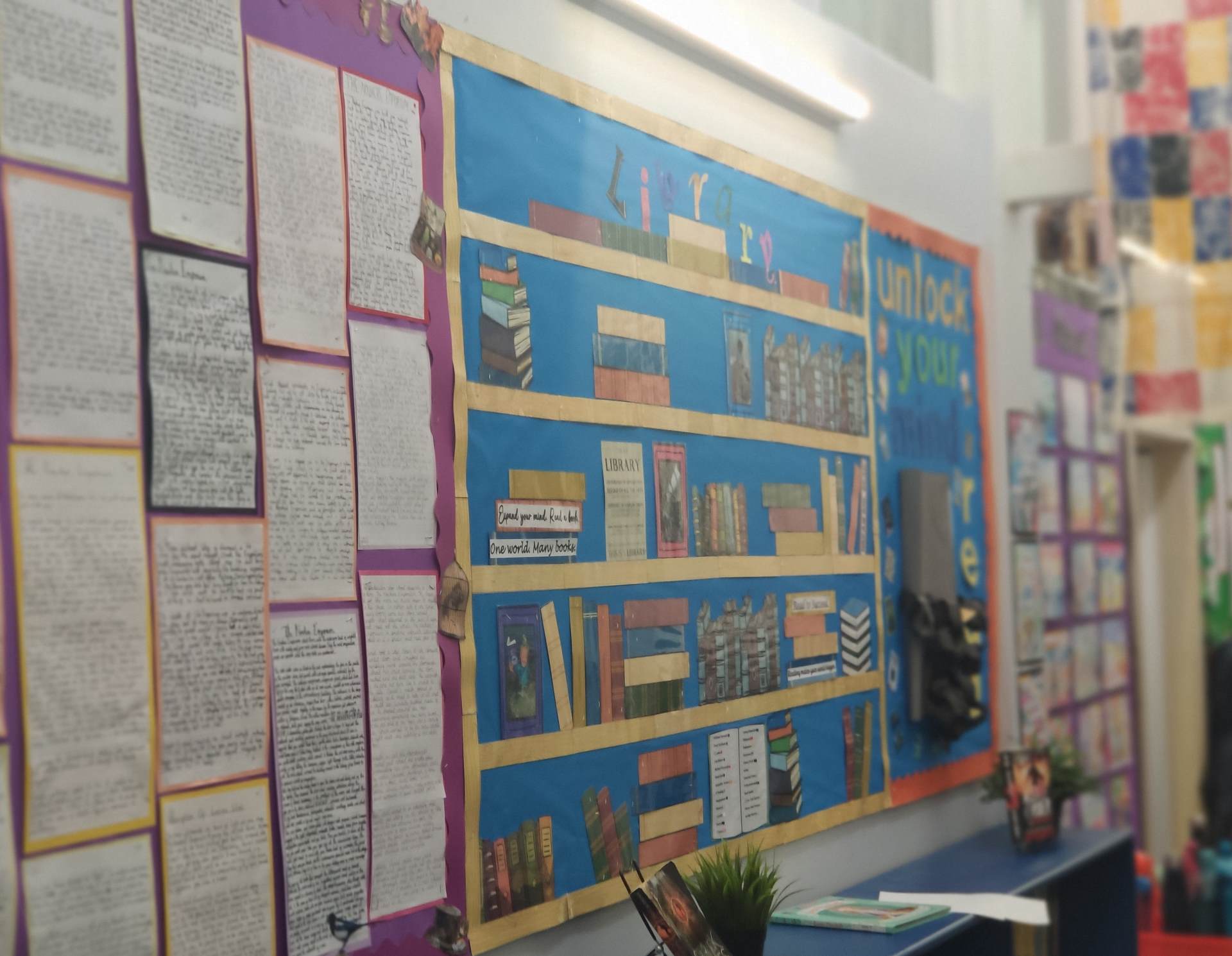
• with a love of reading and a desire to read for enjoyment;
• with an interest in words and their meanings; developing a growing vocabulary in spoken and written forms;
• understanding and using a range of text types, media types and genres;
• being able to write in a variety of styles and forms appropriate to the situation, selecting vocabulary and writing techniques for effect and crafting their writing for their intended audience;
• using their developing imagination, inventiveness and critical awareness;
• having a suitable technical vocabulary to articulate their responses.
• understanding that reading allows them to access a wealth of information across many subjects.
Implementation
Subject Organisation
Foundation Stage:
In the Foundation Stage, children develop their communication, language and literacy skills through a combination of adult-led and child-initiated activities. Activities are planned around high-quality stories and non-fiction texts, providing opportunities for children to develop their vocabulary, comprehension, speaking and listening skills and early writing.
Children receive daily, discrete systematic synthetic phonics teaching through the Supersonic Phonic Friends programme. They follow a structured progression in phoneme-grapheme correspondences, blending, segmenting, reading and spelling. Children are given regular opportunities to apply their developing phonics knowledge when reading and writing.
Provision is made for children who require additional support through intervention programmes and adapted or differentiated class teaching.
Key Stage 1:
In Key Stage 1, daily, discrete phonics teaching continues through the Supersonic Phonic Friends programme. Children have daily English lessons in which reading, writing, vocabulary, grammar and phonics are developed alongside one another, with an emphasis on high-quality texts.
Children take part in whole-class, guided and individual reading activities and have regular opportunities to listen to stories and develop a love of reading. Literacy skills are also developed and applied across the wider curriculum.
Provision is made for children who require additional support through targeted intervention programmes and adapted class teaching.
Key Stage 2:
In Key Stage 2, children have daily English lessons in which reading, writing, vocabulary, grammar, spelling and phonics are taught as interdependent skills. Additional literacy provision includes reading, handwriting, spelling and regular opportunities to enjoy a class novel. Literacy skills are incorporated and developed across the wider curriculum. Provision is made for children who require additional support through targeted intervention programmes and adapted class teaching where appropriate.
Approaches to Phonics
We use the Supersonic Phonic Friends programme to deliver systematic synthetic phonics across the Foundation Stage and Key Stage 1. Phonics is taught through daily, discrete sessions following a structured progression of phoneme-grapheme correspondences, blending, segmenting, reading and spelling.
Children are given regular opportunities to apply their phonics knowledge when reading and writing. Phonics assessments are used to identify children who require additional support, with targeted intervention provided where necessary. Phonics teaching and intervention continue into Key Stage 2 for children who have not yet secured the expected knowledge and skills.
Please refer to our Phonics Policy for further details.
Approaches to Speaking and Listening
Speaking and listening permeate the whole curriculum. Interactive teaching strategies are used to engage all pupils and develop their ability to communicate effectively, supporting the development of reading and writing.
Children are given regular opportunities to develop their speaking and listening skills through talk partners, group discussion, drama, performances, assemblies and classroom discussion.
We recognise the importance of pupils being able to speak, read and write Standard English fluently and accurately, while also valuing each pupil's own dialect and language. Staff model appropriate language and Standard English to support pupils in developing effective communication skills for later life.
Approaches to Reading
We teach reading through a structured approach which develops pupils' ability to read fluently, understand increasingly challenging texts and think critically about what they read. Our approach draws on the principles of Wayne Tennent's reading framework, with pupils explicitly taught to respond to texts through looking closely at what the text tells them, identifying clues and using their own thinking and reasoning to develop deeper responses.
Teachers model effective reading strategies and thinking processes during shared and whole-class reading. Children are taught to retrieve information, clarify vocabulary and meaning, make inferences, explain ideas and justify their responses using evidence from the text. Discussion is an integral part of reading lessons, enabling pupils to articulate, challenge and develop their ideas.
Alongside explicit reading instruction, children have regular opportunities to read independently for both pleasure and assessment. We promote a love of reading through exposure to a wide range of high-quality fiction, non-fiction, poetry and other texts, alongside regular opportunities for adults to read aloud to children.
A range of reading materials and schemes are used to support early and developing readers. Children who require additional support have access to appropriately structured texts, including age-appropriate materials matched to their reading ability. Teaching assistants, volunteers and other adults provide additional opportunities for children to read with an adult where appropriate.
Children are encouraged to read regularly at home, with parents and carers supported to develop their child's reading through discussion and shared reading. We provide opportunities for parents to learn how to support their child's reading through workshops and communication with school.
Teachers assess reading through formative assessment during lessons and through regular assessment activities. Assessment is used to identify strengths, gaps and next steps in learning.
We recognise the value of adults reading aloud to children, both in school and at home, to develop pupils' understanding of language and story, broaden their vocabulary, inspire discussion and nurture a lifelong love of books.
Approaches to Writing
We aim to develop confident, competent and adventurous writers who can communicate clearly and effectively for a range of purposes and audiences. Writing is taught through a structured writing cycle in which reading, vocabulary, grammar, sentence structure, phonics and spelling are treated as interdependent skills.
We use the Talk for Writing approach to support the teaching of narrative writing, enabling pupils to internalise the structures, language and features of effective writing before applying and adapting them independently. Through oral rehearsal, shared writing, teacher modelling and the study of high-quality examples, pupils develop an understanding of how writers make deliberate choices about vocabulary, sentence structure, organisation and effect.
Pupils are taught to write for a range of purposes and audiences and to make increasingly independent choices about the content and construction of their writing. Grammar and sentence structures are taught explicitly and applied within meaningful writing contexts. Vocabulary is explored, discussed and deliberately selected to enhance meaning and effect.
Drafting, editing and crafting are an integral part of the writing process. Pupils are taught to reread their work, identify areas for improvement and make purposeful changes to vocabulary, sentence structure, punctuation, cohesion and overall effect. As pupils move through the school, they become increasingly independent in evaluating and improving their own writing, using teacher feedback, success criteria and writing outcomes to guide their decisions.
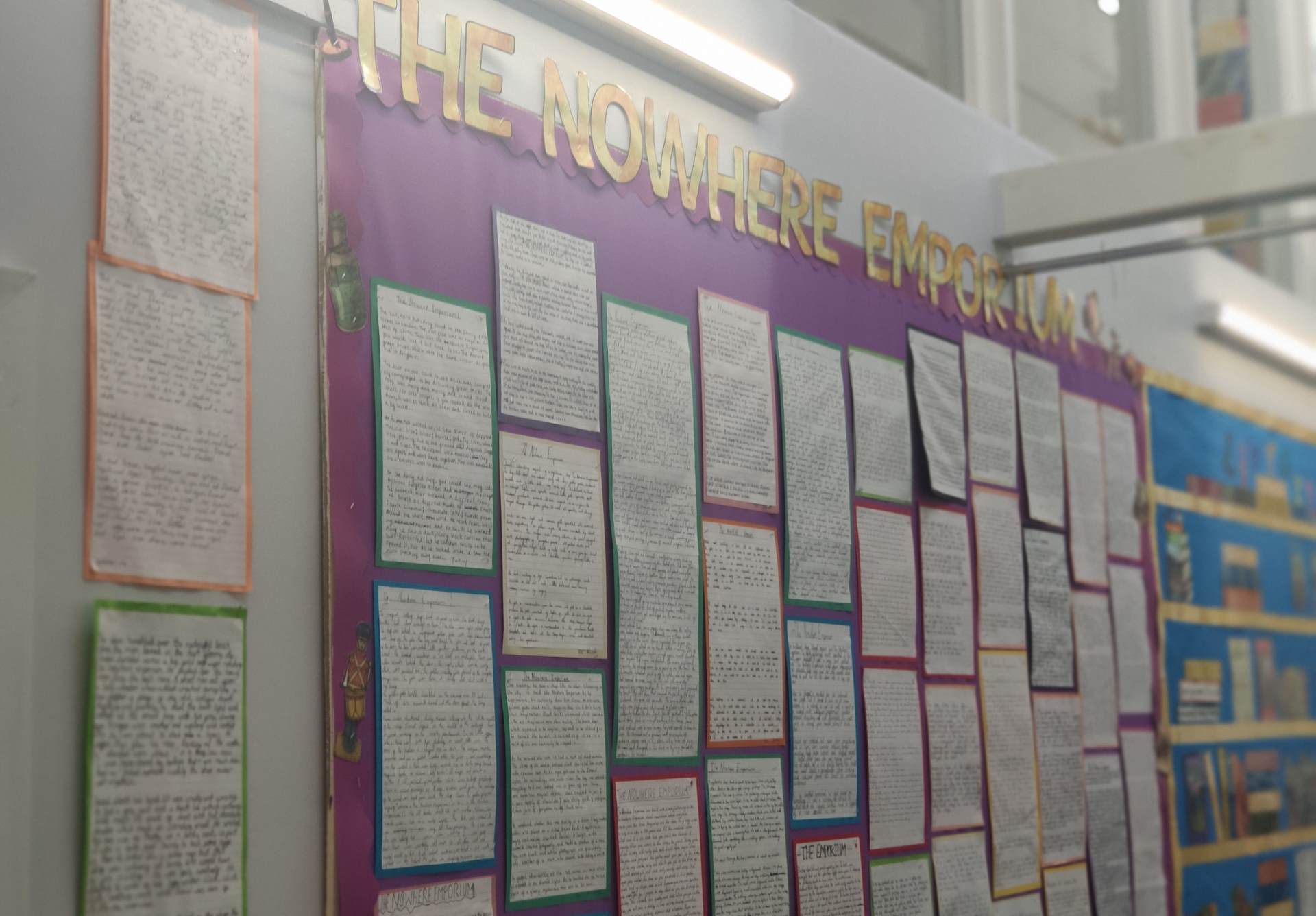
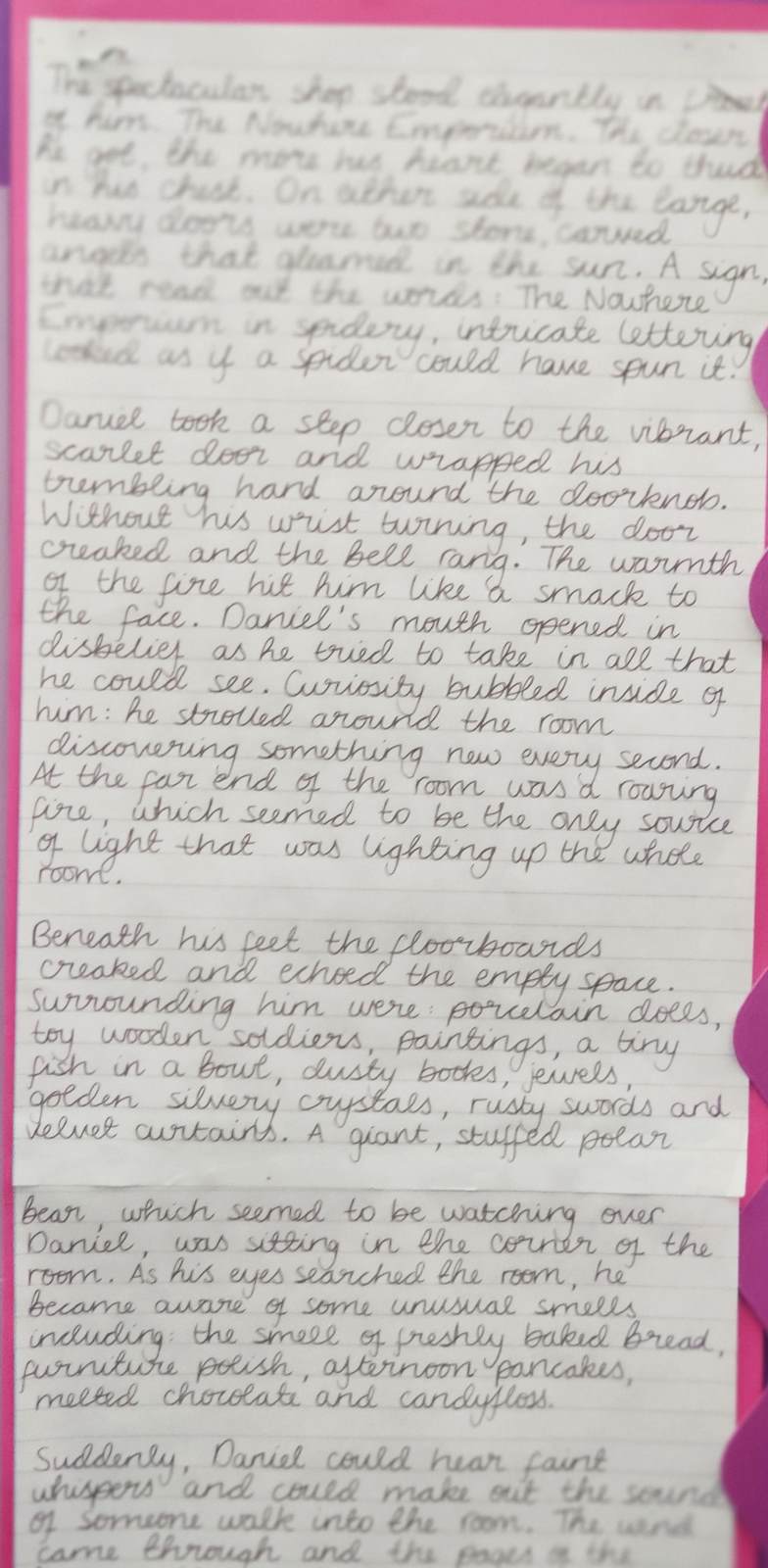
Teachers model the writing process through shared and guided writing, while pupils are given regular opportunities to write independently at length. Writing is completed for a range of purposes and audiences and across different contexts, including opportunities to apply writing skills across the wider curriculum.
Writing is assessed through the school's marking grids and year-group writing outcome grids. Teachers use these to identify strengths and areas for development and to inform subsequent teaching. Writing is moderated within year groups and across the Trust to support consistency in assessment.
Impact
Impact: Reading
Through the teaching of systematic phonics, our aim is for children to become fluent readers as early as possible, enabling them to focus increasingly on fluency, comprehension and critical reading as they move through the school.
- In EYFS and KS2, teachers keeps a record of the children’s journeys through the phonic band books and this is discussed during termly pupil progress meetings.
- Attainment in reading is measured through statutory end-of-Key Stage 2 assessment and other school-based assessments, with outcomes considered alongside national and Trust data.
- The Year 1 Phonics Screening Check is used to measure attainment at the end of Year 1.
- Salford Reading Tests are carried out termly in both reading age and comprehension age.
- Comprehension tests are carried out at the end of each term and the results are discussed during termly pupil progress meetings.
- Children develop the ability to retrieve information, clarify meaning, make inferences and explain their thinking, supporting their ideas with evidence from the text.
- Children increasingly approach unfamiliar texts with confidence and independence, using taught strategies to monitor and develop their understanding.
- Children can discuss texts thoughtfully, articulate their ideas and respond constructively to the ideas of others.
Through the writing cycle, our aim is to develop confident, competent and adventurous writers who can use their skills across the curriculum.
- BHCPS marking grid is used to assess each child’s piece of writing at the end of a writing cycle.
- Year-group writing outcome grids are used to assess children's writing. Children are given appropriate writing targets and next steps, which are discussed during termly pupil progress meetings.
- Teachers moderate across classes to ensure consistency.
- Once a year, writing moderation is carried out across our trust schools.
- Across KS2, children are explicitly taught to draft, edit and craft their writing, making purposeful changes to improve vocabulary, sentence structure, punctuation, cohesion and effect. Evidence of this process can be seen in pupils' books.
- Children increasingly use success criteria, feedback and writing outcome grids to identify strengths and make purposeful improvements to their own writing.
- Children can discuss their writing, explain the choices they have made and identify how they can improve it.
Reading Skills Progression
Writing Skills Progression
EYFS - Progression in Role Play
EYFS - Progression in Small World Play
EYFS - Progression in Drawing
Gallery